THE NATION BUILDERS – ORDINARY PEOPLE MAKING A DIFFERENCE IN FIETAS

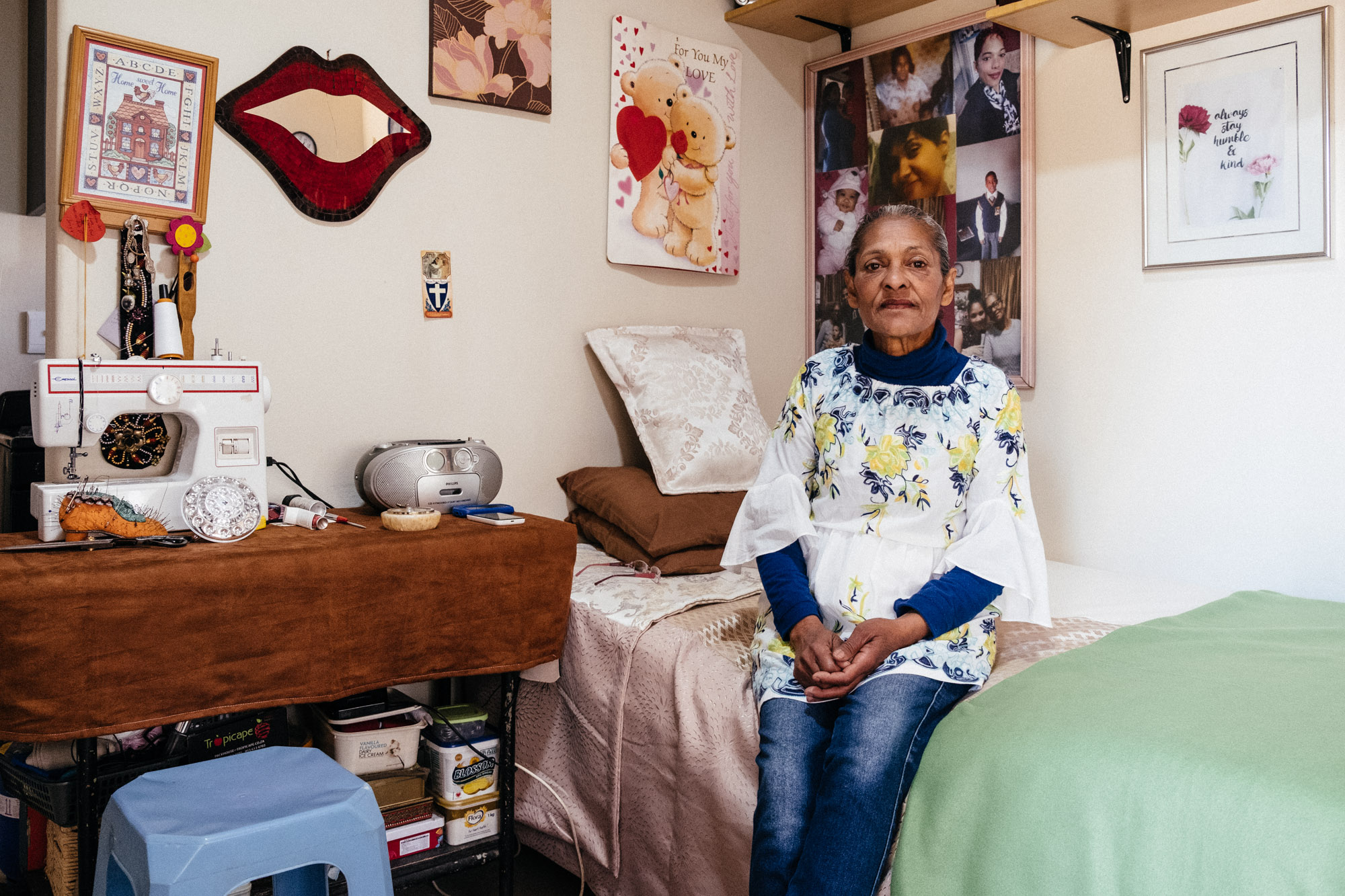
Irene Paul at her home in Fietas. She lives alone in a one-bedroom flatlet after her husband passed away 18 years ago. She runs a sewing business to support herself, and volunteers her skills as a cook at Jan Hofmeyer Community Services, which runs a dining hall from an old church on 14th Street providing free meals to the elderly in the community. Jan Hofmeyer, Johannesburg, 21 July 2019. Image: James Puttick.

Many South Africans have never heard of Fietas, an area located on the edge of downtown Johannesburg just west of Braamfontein and north of Fordsburg. It was originally populated by Africans, Coloureds, Whites, Chinese, Cape Malays and Indians and covered the present day suburbs of Vrededorp, Pageview and Jan Hofmeyer. The local name “Fietas” originated as a reference to the well-known men’s outfitters – “Fitters” or “Fittas” – that traded on 14th Street in the decades leading up to the 1970s. The area shares a similar painful history to Sophiatown, and the close-knit community and vibrant trade that Fietas became well known for ended in 1976 when the non-white residents were forcibly relocated to far away suburbs under the Group Areas Act during apartheid. Fietas once again became a multi-racial neighbourhood after the fall of apartheid, but it is a shell of it’s former self. To date not a single land claim has been settled for the area, and the suburb has degenerated into a state of neglect. The community is poor and marginalized, and homelessness, crime and drug addiction are major problems.
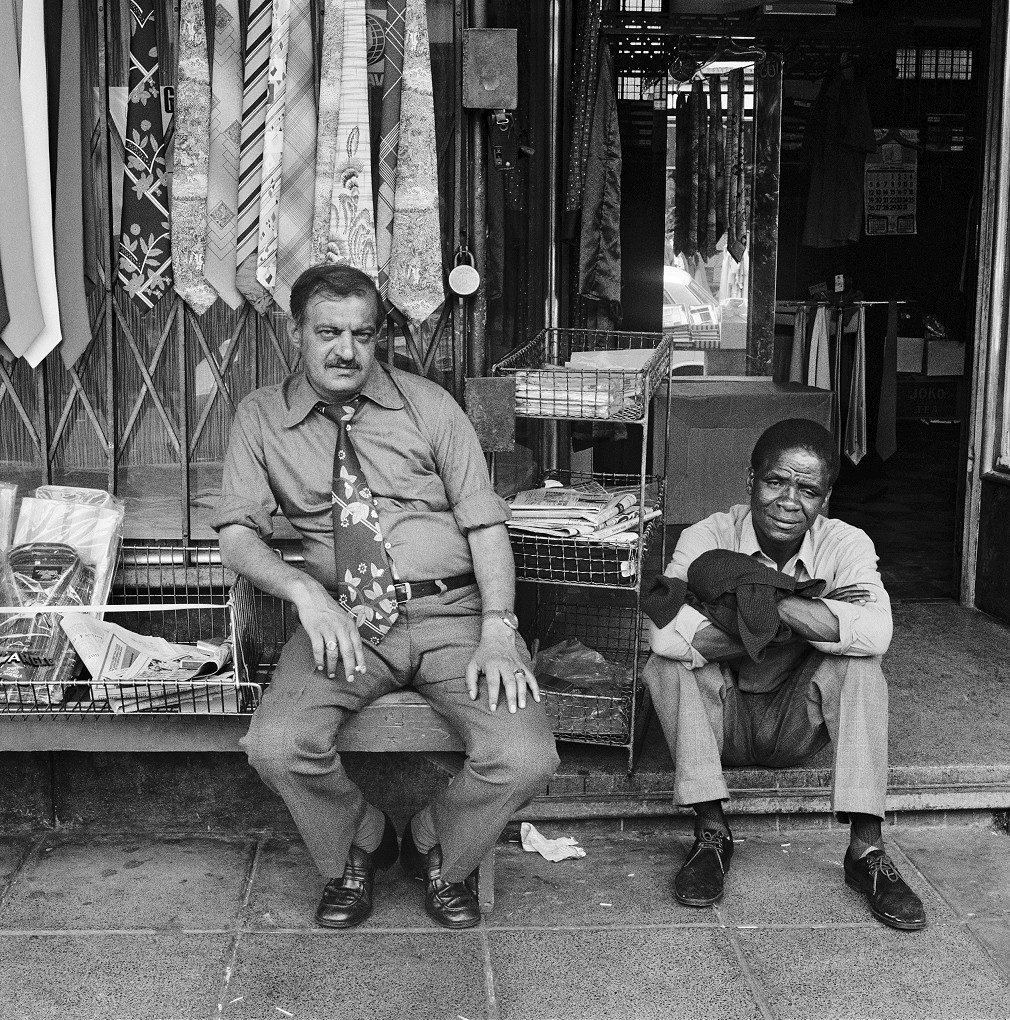
Abdulhay Garda and his assistant, before the destruction of Fietas under the Group Areas Act, 1976. Image: David Goldblatt.

I visited Fietas recently to find out more about some of the people who are making a difference in supporting and uplifting the community. People who give of their time and effort to volunteer providing meals, clothing, blankets, and trauma and educational support to the elderly and children living in the area.

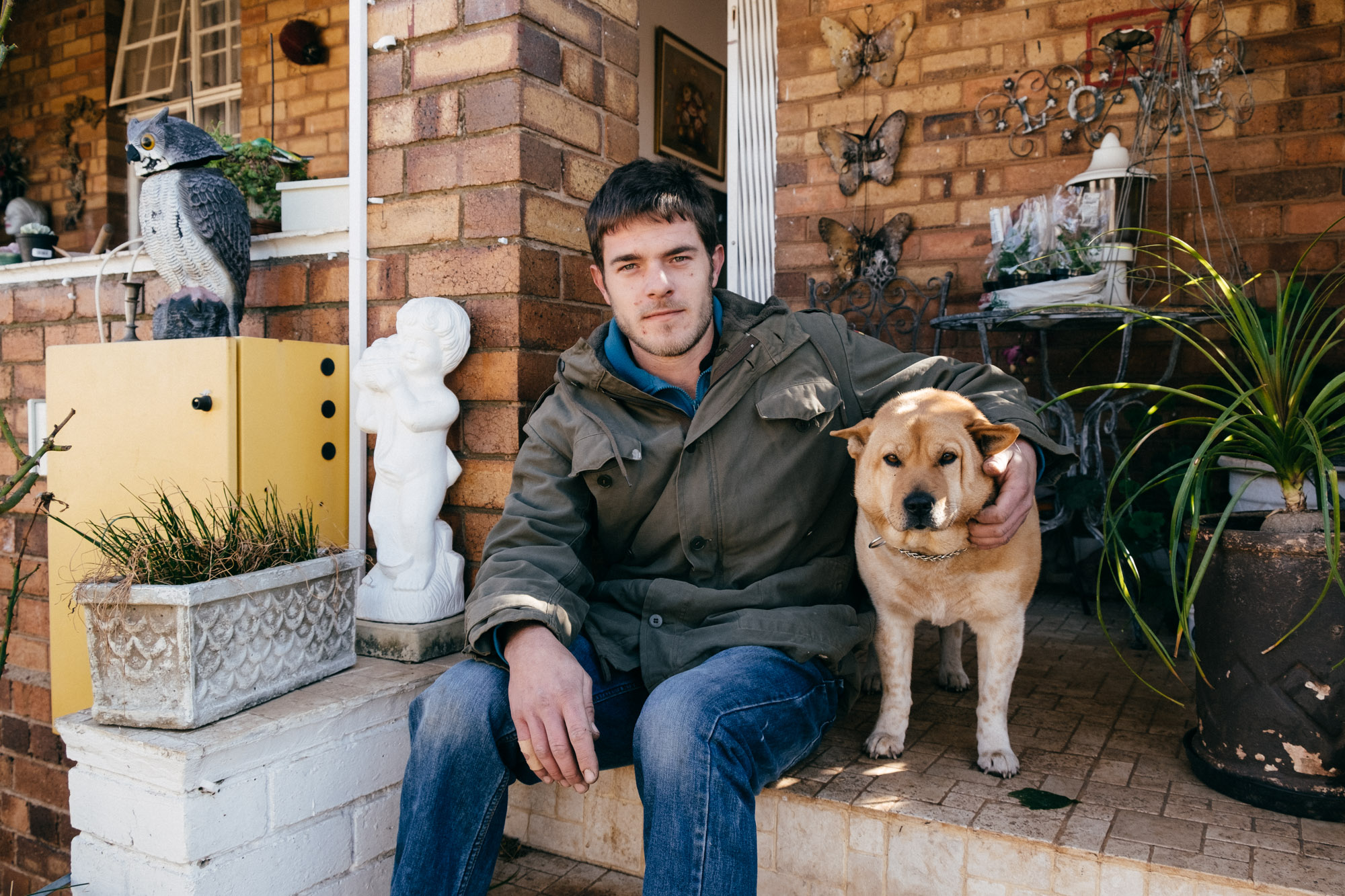
“This row of houses were used as one of the sets during filming of the soap opera Agter Elke Man”, Monica Joubert tells me from the small, neat living room of her home on Sonneblom Street in Jan Hofmeyer. She manages the community dining hall at the old church on 8th Street that provides daily meals to the elderly in the community. She lives alone after her husband committed suicide a decade ago, but has found joy and meaning in life again through her volunteer work. Her son Bernard lives a few houses up the street and is a strong support. Bernard makes a living as a freelance mechanic, electrician and locksmith, but also volunteers his services as a handyman and delivery driver at the dining hall and play school run by Jan Hofmeyer Community Services.
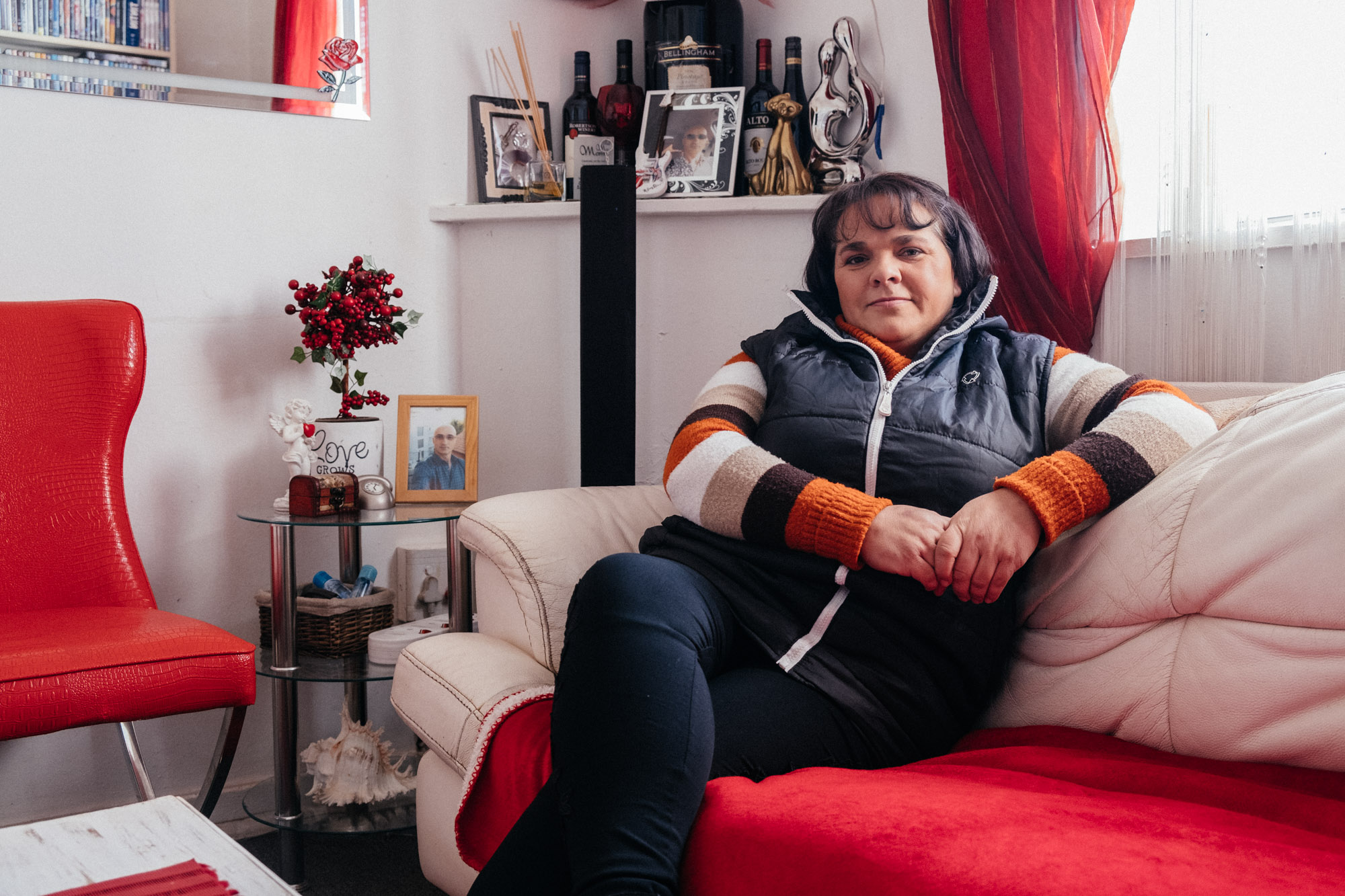
Monica Joubert in her living room at 1 Sonneblom Street, Jan Hofmeyer, Johannesburg, 21 July 2019. Image: James Puttick.
Bernard Joubert on his mother’s verandah, Jan Hofmeyer, Johannesburg, 21 July 2019. Image: James Puttick.

Just down the road on 1st Street lives Irene Paul. Irene is an artisan. She supports herself through her informal sewing business, making and selling garments, cushions and bedcovers. Her other passion is cooking, and she bakes meals daily for the dining hall at Jan Hofmeyer Community Services. Her husband passed away 18 years ago, so she lives alone in a semi-detached single room that shares a bathroom with her neighbour who is a drug addict.

A little further down the road, on 2nd Street is the play school run by Jan Hofmeyer Community Services. Nico Hattingh volunteers as the manager of the school, which provides day care to 24 disadvantaged children from the community. He used to work for South African Railways until he was forced to retire after a car accident in 1997. He has volunteered at the school ever since his retirement 21 years ago.
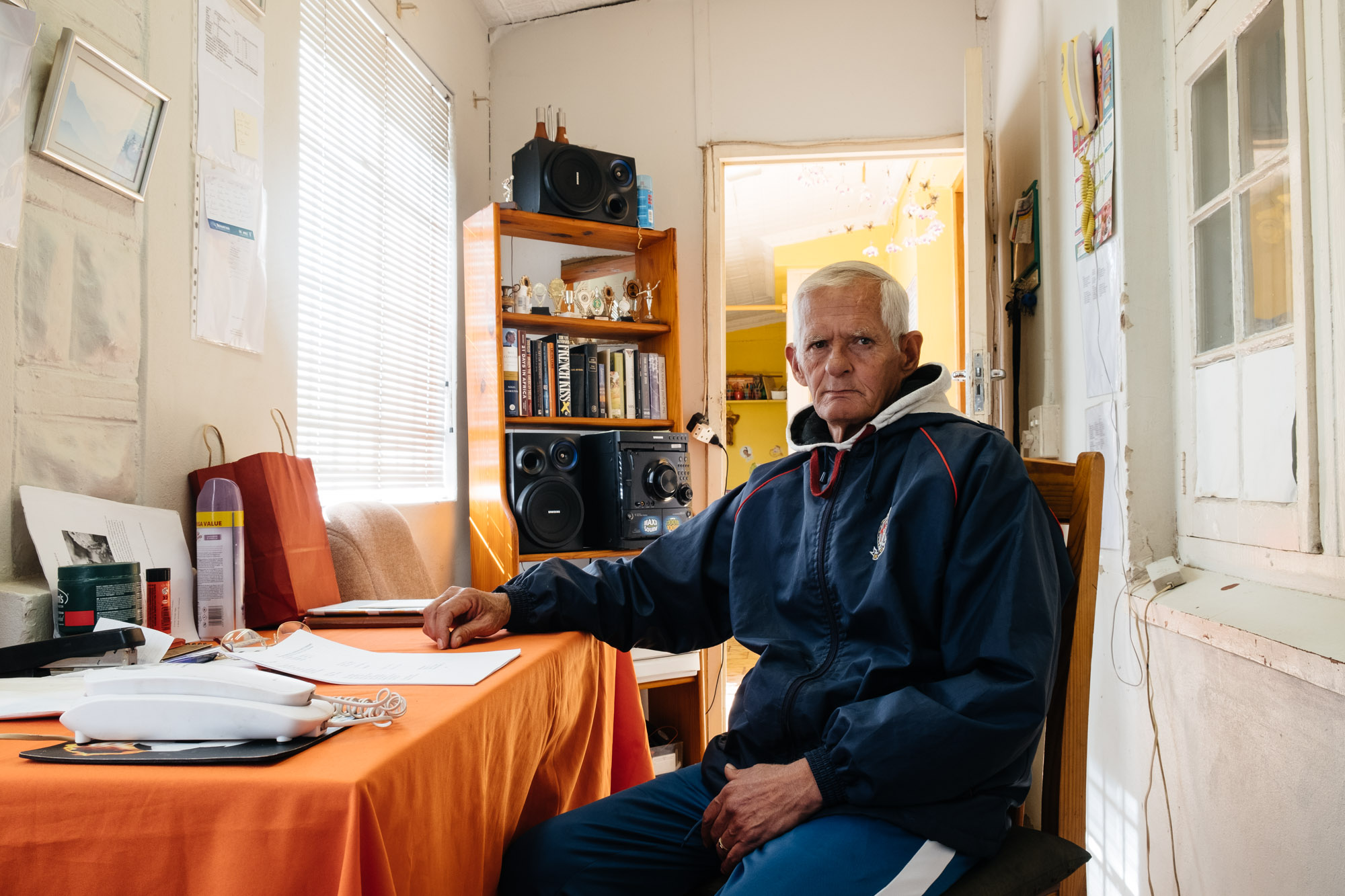
Nico Hattingh in his office at the Jan Hofmeyer Community Services play school in Fietas, Johannesburg, 22 July 2019. Image: James Puttick.

Rebecca Mosimanyana lives in a small backyard dwelling on 6th Street a few roads down. She came to Johannesburg from Mahikeng three years ago with her daughter and two grandchildren to find work, as there was none at home. She still has not found formal employment, and survives off her social grant. Rebecca sleeps on the floor and her daughter and grandchildren share a single bed in their cramped living space. She volunteers daily as a cleaner at the dining hall and play school.
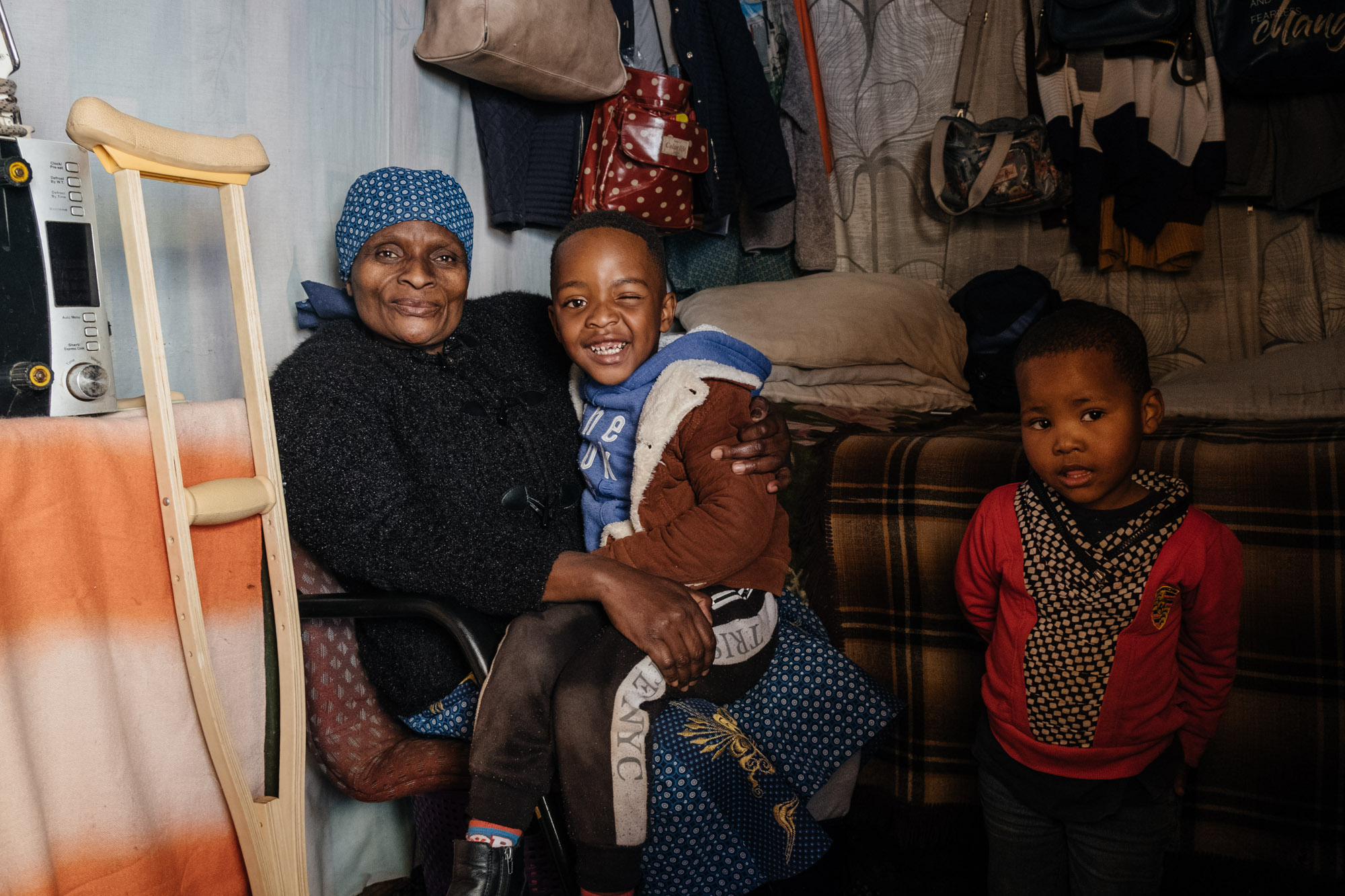
Rebecca Mosimanyana with her grandson Kabelo and his friend in her backyard dwelling on 6th Street, Vrededorp, Johannesburg, 21 July 2019. Image: James Puttick.

Just over the road from Rebecca, in the council block on Vrede Road, lives Helen Smuts. She too lives in a backyard dwelling, hers at the back of her daughter’s flatlet at Palm Court. Her son-in-law runs a small shop from the flat, and Helen survives on a small pension. She volunteers as a cook and a cleaner at the community dining hall.
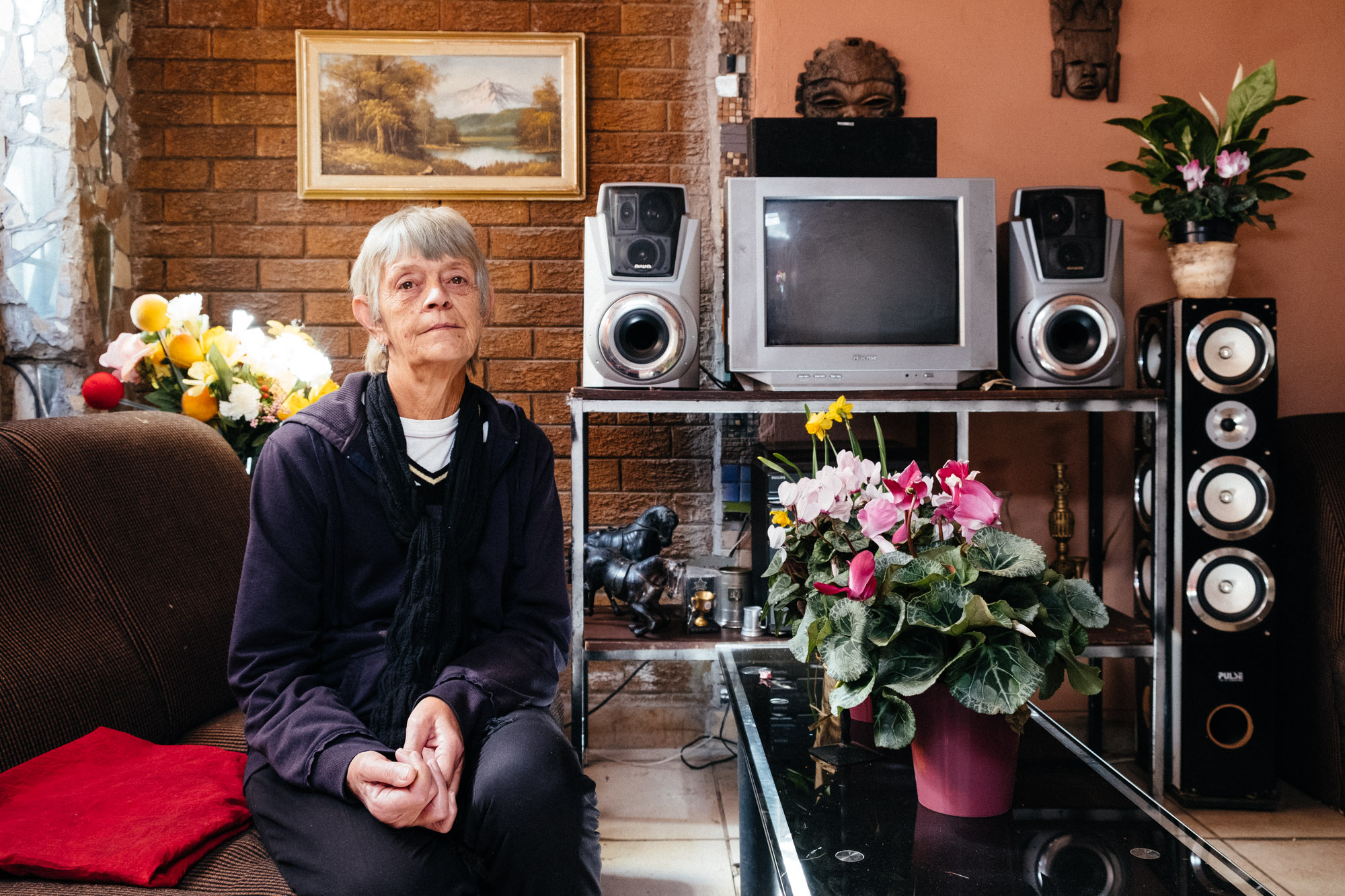
Helen Smuts in her daughter’s living room at Palm Court, Vrededorp, Johannesburg, 21 July 2019. Image: James Puttick.

Every morning, Monday to Saturday just before 7am, Catherine Mafuna leaves her flat at Cederhof, which is across the road from Palm Court. She meets Helen on Vrede Road and they walk together to the old church on 8th Street to begin their day volunteering. “Ek het a baie klein hartjie vir ou mense en klein kinders (I have a soft spot for the elderly and children)”, says Catherine. She used to work 12 hour night shifts as a care-giver at Garden City Hospital until she retired three years ago due to pain in her legs. Since then she has volunteered at Jan Hofmeyer Community Services where she manages the library they run out of the play school and works in the kitchen at the dining hall.
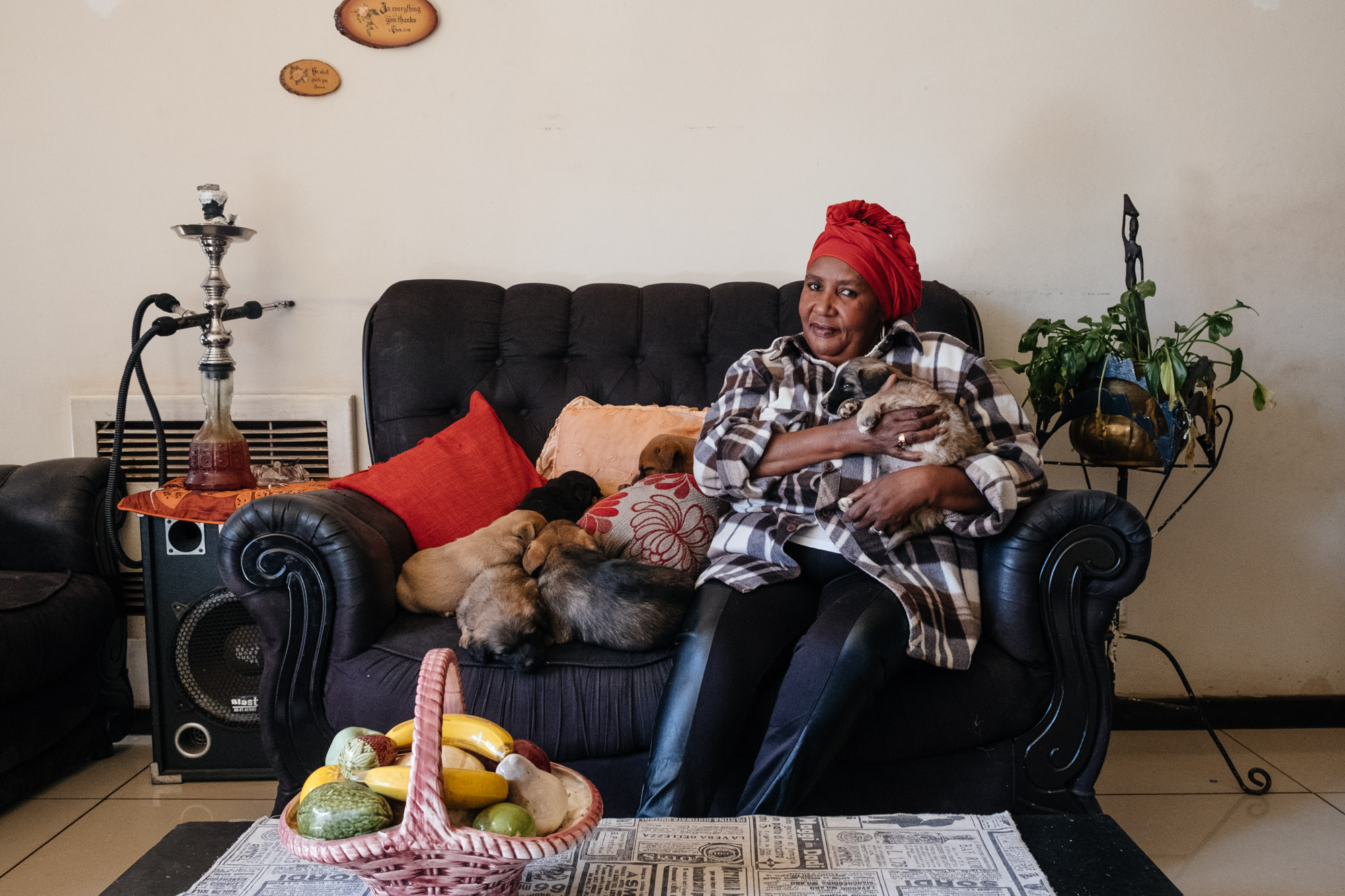
Catherine Mafuna in her living room at Cederhof flats, Vrededorp, Johannesburg, 21 July 2019. Image: James Puttick.

The work that these people do for their community is vital and nothing short of inspirational. Work with no financial reward in mind, just work for the sake of making a contribution, work that comes from the heart. Working together in the hope of making a difference, in the hope that things can get better. These people are true nation builders. They set an example for the rest of us to follow.
JOZI PEOPLE – AYANDA MNYANDU

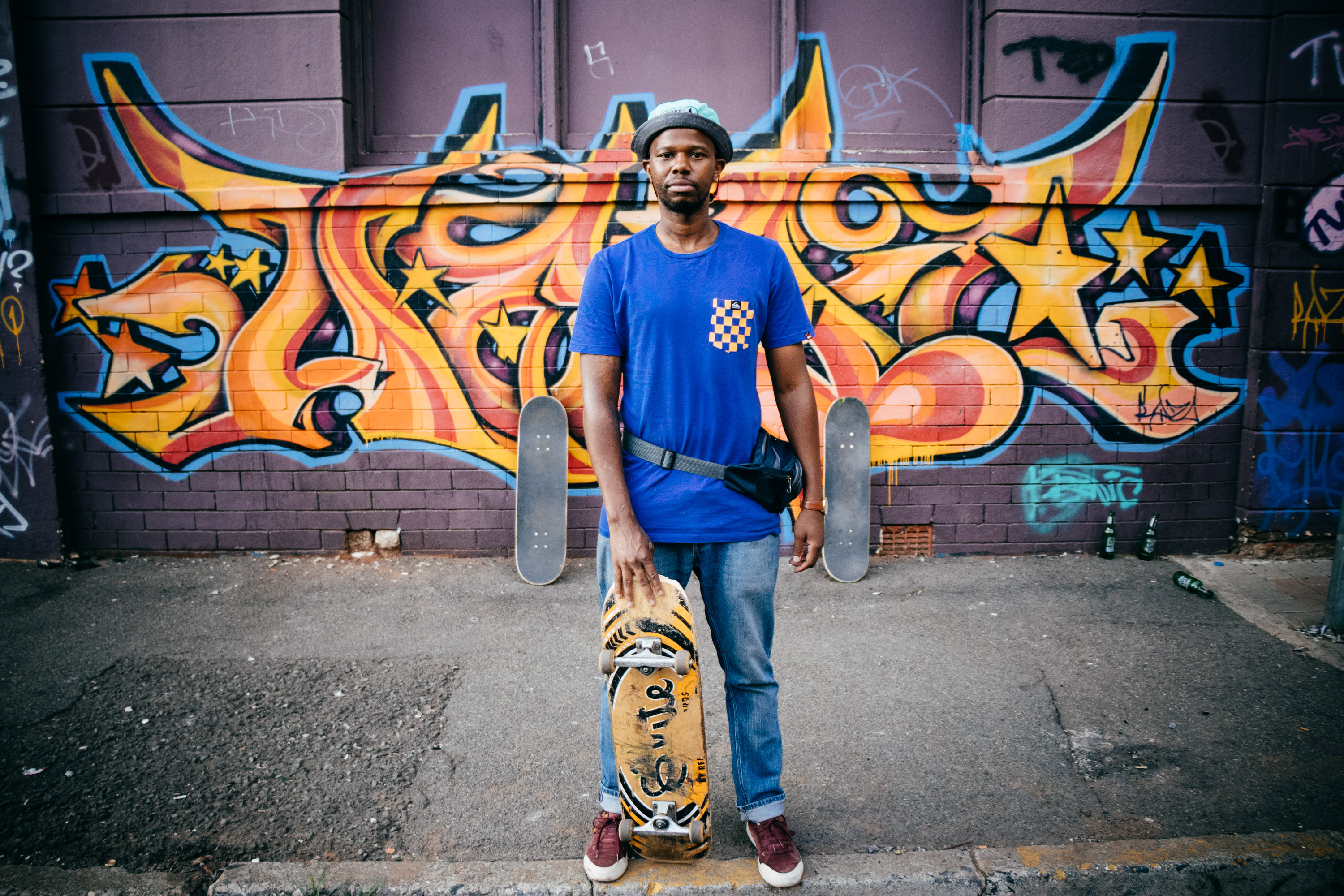
Ayanda Mnyandu is a man with big ideas and a passion for Johannesburg’s inner city. He’s the co-founder of City Skate Tours – a company he started with a good friend in 2017 – which specializes in providing people with an intimate experience of downtown Johannesburg while navigating the city streets on a skateboard. While that may sound far-fetched, or even plain terrifying, I can assure you that it’s an experience not to be missed, even if you’ve never ridden a skateboard before.

“Part of the reason I do what I do is to make skateboarding more accessible to people who have never done it before…to open it up to a bigger audience. I want your first experience on a skateboard to be fun”, says Ayanda. He spends the first 30 minutes of each tour teaching the basics of riding a skateboard so that his guests are able to navigate the city streets with their newfound skill. And then it’s off onto the streets for the real experience.

“When people come to Africa, a lot of the time the perception is “wildlife safari”, but there’s more to Africa than its wildlife and natural beauty. We have urban centers in Africa where there is a lot to learn and experience. For me the bigger picture is to slowly change the perception of what tourism is in Africa…let’s start exploring urban spaces too and move away from this notion that Africa is just wildlife and rural villages…we have urban centers where there are smart, educated and passionate people…there are a lot of stories in these urban environments”, says Ayanda, whose passion for the Johannesburg inner city is boundless.

And that passion is what you get while on one of his tours. For Ayanda, skateboarding is the means to get you to all the places in the city he has to show, his main goal being to give visitors an insight into the dynamics and culture of the city, and to provide a deeper understanding of this urban space. Says Ayanda, “Let’s start thinking differently about the inner city. What’s the potential in this place? What do we understand by an urban space? Can we live here? Can we work here? What improvements can we make? What is the culture we want to promote?”

By asking these questions, he hopes to stimulate thought on ways to drive Johannesburg forward and create a more integrated city in terms of the people, the transport, and the living spaces, and to try to find a common culture without discounting people’s differences. He sums his approach up well when he says, “I feel that as a resident of the city I can contribute to making Johannesburg a world-class city instead of merely waiting for government to do everything for us.”

I made this short video if you’d like to get a glimpse of a skate tour experience with Ayanda, or you can check out this link for a description of what you can expect.

In addition to the skate tours, Ayanda works at Skateistan, an international NPO focused on youth development through skateboarding. They have project sites in South Africa, Afghanistan and Cambodia and their focus is on supplementing school learning, particularly science and mathematics, as well as a programme called “Skate Create” which teaches the youth about the world around them through art and play.

And to top it all off, he’s got a post-graduate degree in economics. But instead of opting for the corporate environment, he decided to keep his work and career aligned to his passion of skateboarding. And he doesn’t regret his choice, telling me, “I love skateboarding, I’m really happy that I’m able to do it on a daily basis. Skateboarding brings it all together for me.”

Plans for the future? With a twinkle in his eye, Ayanda tells me that the end-goal is to have skateboarding tours in the major cities of other African countries…he rattles off a list of places that make me want to pack my bags and go on an adventure, ”Kenya, Senegal, Cameroon, Egypt, Mali…”

Well I’d say the future looks bright for Ayanda. And I’d say the future of Johannesburg and Africa looks bright too, especially with someone as smart and passionate as Ayanda leading the way.

DOWNTOWN JOBURG IS DROWNING IN A SEA OF RUBBISH

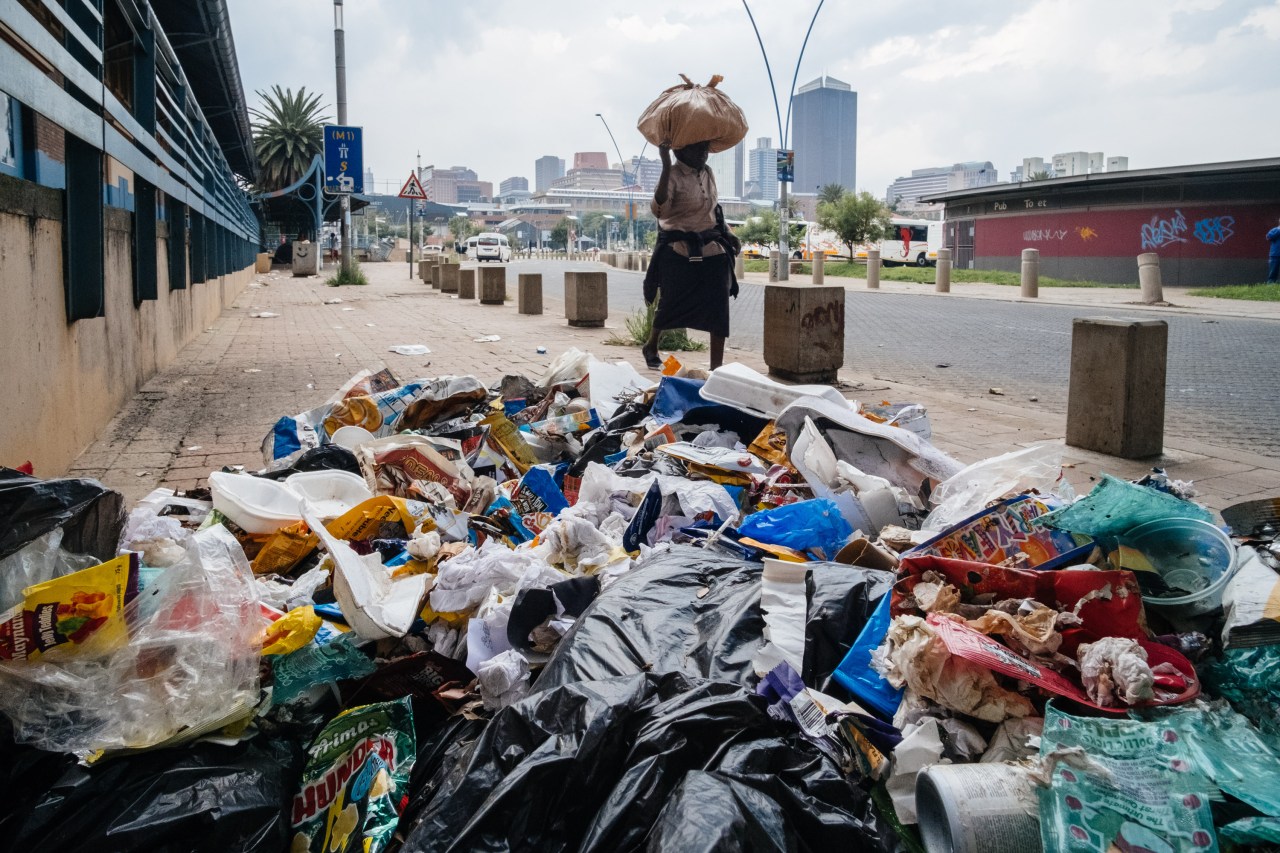
Anyone who has visited the Johannesburg CBD recently would have noticed the dire state of cleanliness that has unfortunately become an everyday sight on the city’s streets. In fact, it is so common that it appears as if people have become desensitized to the unsightly piles of rubbish and the stench of rotting waste. Not because they don’t care, but rather as a last-ditch attempt at some form of self-defense against the constant assault on their senses.

The video below, published recently by SABC Digital News, sums up the situation well and provides a graphic window into the state of the streets of our city.

Pikitup, the City of Johannesburg’s waste management company responsible for the removal of refuse has blamed the problem on illegal dumping, which they say has been spiralling out of control.

The current approach by local government has therefore focused on awareness initiatives, such as the A Re Sebetseng Programme, which is a monthly citywide cleaning campaign that strives to encourage residents to take care of their environment and promote a culture of recycling. However, the programme was established in August 2016 and the problem persists today so it is clear that further interventions are required.

The City of Johannesburg’s approach has recently been criticized, with critics pointing out that it is not enough to merely concentrate on public awareness campaigns, and that there are deeper issues within Pikitup that need to be addressed. Amongst these includes the current lack of waste management expertise at the most senior levels of the company since April 2018 (for a deeper critique of the current situation at Pikitup read here).

Unfortuantely, it seems that the issue has become highly politicized, with the current DA-led government blaming the previously ANC-led government for the current crisis, and vice versa. And, as usually happens, while the politicians point fingers at each other and attempt to lay claim to the moral high ground, it is the everyday people that suffer on the ground. In this case it is the most vulnerable, the homeless people living on the street of the CBD who are the most acutely affected.

The National Institute for Communicable Diseases (NCID) has raised the alarm over the current situation and warned that the high levels of food waste, human waste and dead animals on the streets of the CBD are a breeding ground for pathogens (salmonella, Shigella, E. coli, Hepatitis A, and viral pathogens) that cause disease in humans.

Furthermore, Professor John Frean, deputy director of the NCID, reminds us that the last time there was such a build-up of human waste (during the Pikitup strike in 2016), a rat infected with Plague was found in the Johannesburg CBD. The spread of this disease has serious consequences for public health as well as tourism.

So while the problem persists and appears to be worsening, we are left to ask ourselves what we as citizens of Johannesburg can do to help alleviate the problem. I believe the biggest difference we as the public can make is by reducing the amount of waste that Pikitup needs to collect. The first priority is to separate recyclable and non-recyclable material. Keeping the recyclable material separate makes it easier for street recyclers to access, without having to rip open refuse bags to separate the waste. You can take it a step further and separate the recyclable and non-recyclable plastics, and create eco-bricks with the non-recyclable plastics (see this website for a description of eco-bricks, how to make them, and a drop-off point in Johannesburg). And if you have a garden, why not create a worm farm with your organic waste?

Finally, why not become an active citizen and join the #trashtag challenge or the A Re Sebetseng Programme’s monthly clean-ups? And if you’re looking for a bit of inspiration then have a look at the short video below on Kigali, Africa’s cleanest city.