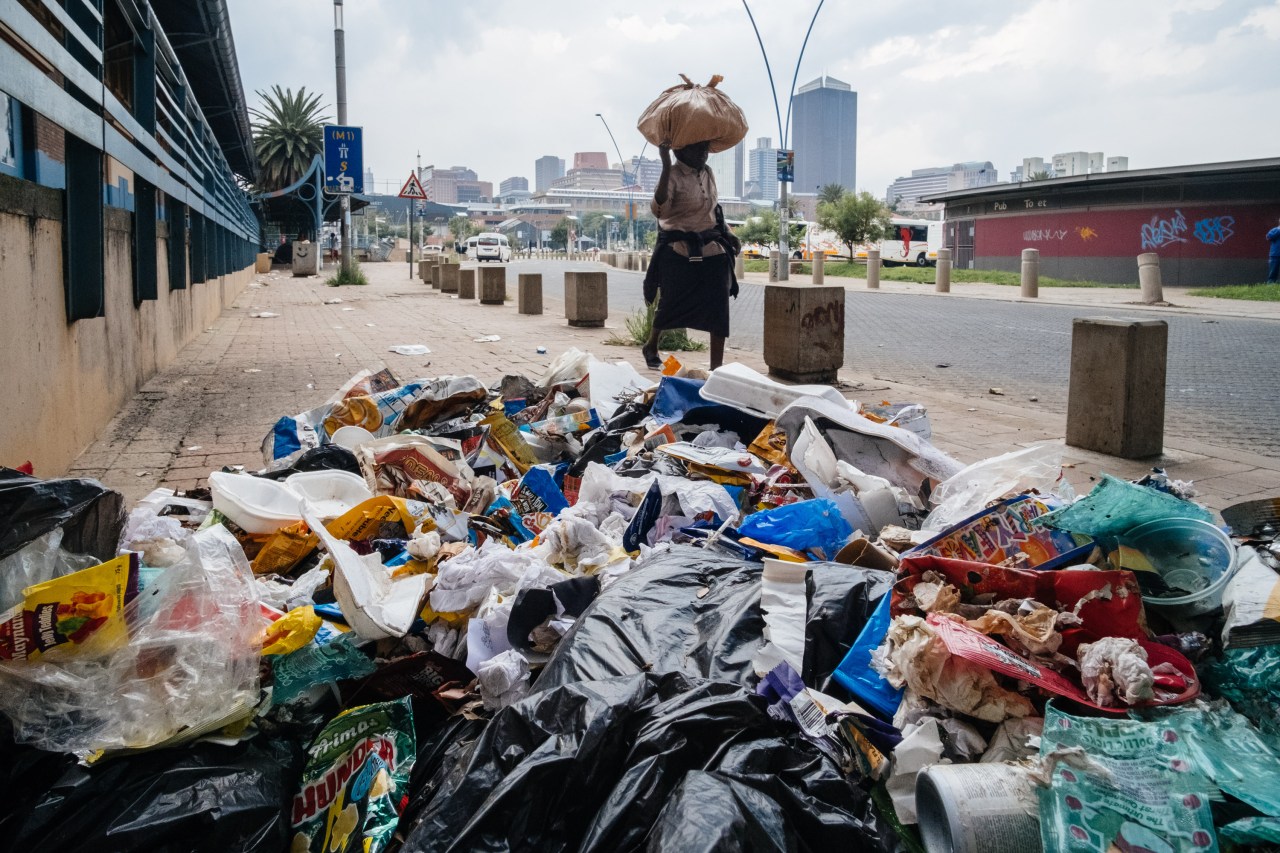
Anyone who has visited the Johannesburg CBD recently would have noticed the dire state of cleanliness that has unfortunately become an everyday sight on the city’s streets. In fact, it is so common that it appears as if people have become desensitized to the unsightly piles of rubbish and the stench of rotting waste. Not because they don’t care, but rather as a last-ditch attempt at some form of self-defense against the constant assault on their senses.
The video below, published recently by SABC Digital News, sums up the situation well and provides a graphic window into the state of the streets of our city.
Pikitup, the City of Johannesburg’s waste management company responsible for the removal of refuse has blamed the problem on illegal dumping, which they say has been spiralling out of control.
The current approach by local government has therefore focused on awareness initiatives, such as the A Re Sebetseng Programme, which is a monthly citywide cleaning campaign that strives to encourage residents to take care of their environment and promote a culture of recycling. However, the programme was established in August 2016 and the problem persists today so it is clear that further interventions are required.
The City of Johannesburg’s approach has recently been criticized, with critics pointing out that it is not enough to merely concentrate on public awareness campaigns, and that there are deeper issues within Pikitup that need to be addressed. Amongst these includes the current lack of waste management expertise at the most senior levels of the company since April 2018 (for a deeper critique of the current situation at Pikitup read here).
Unfortuantely, it seems that the issue has become highly politicized, with the current DA-led government blaming the previously ANC-led government for the current crisis, and vice versa. And, as usually happens, while the politicians point fingers at each other and attempt to lay claim to the moral high ground, it is the everyday people that suffer on the ground. In this case it is the most vulnerable, the homeless people living on the street of the CBD who are the most acutely affected.
The National Institute for Communicable Diseases (NCID) has raised the alarm over the current situation and warned that the high levels of food waste, human waste and dead animals on the streets of the CBD are a breeding ground for pathogens (salmonella, Shigella, E. coli, Hepatitis A, and viral pathogens) that cause disease in humans.
Furthermore, Professor John Frean, deputy director of the NCID, reminds us that the last time there was such a build-up of human waste (during the Pikitup strike in 2016), a rat infected with Plague was found in the Johannesburg CBD. The spread of this disease has serious consequences for public health as well as tourism.
So while the problem persists and appears to be worsening, we are left to ask ourselves what we as citizens of Johannesburg can do to help alleviate the problem. I believe the biggest difference we as the public can make is by reducing the amount of waste that Pikitup needs to collect. The first priority is to separate recyclable and non-recyclable material. Keeping the recyclable material separate makes it easier for street recyclers to access, without having to rip open refuse bags to separate the waste. You can take it a step further and separate the recyclable and non-recyclable plastics, and create eco-bricks with the non-recyclable plastics (see this website for a description of eco-bricks, how to make them, and a drop-off point in Johannesburg). And if you have a garden, why not create a worm farm with your organic waste?
Finally, why not become an active citizen and join the #trashtag challenge or the A Re Sebetseng Programme’s monthly clean-ups? And if you’re looking for a bit of inspiration then have a look at the short video below on Kigali, Africa’s cleanest city.
 Jozi Downtown